 EN
EN
Why Insomnia Is Driving CES Market Growth
Rising Prevalence of Clinical Insomnia and Consumer Demand for Drug-Free Solutions
More than 30% of adults around the world struggle with insomnia, according to recent studies. Companies are losing about $740,000 annually for every 1,000 workers affected by chronic sleep issues, as reported by the Ponemon Institute back in 2023. Because of these costs, people are looking for alternatives to pills. Many have grown tired of traditional sleeping medications because they can lead to addiction problems, leave them feeling groggy during the day, and mess up how our bodies naturally regulate sleep cycles. There's been quite a jump in searches for "ways to fix insomnia without drugs" since 2022. People seem to be learning more about how sleep works and prefer methods that don't come with big risks. Research supports this trend too. Studies show that CES devices help people fall asleep faster by about 40%, and they don't cause that lingering sleepy feeling the next morning. For busy professionals trying to get their thinking straight and emotions under control after years of poor sleep, these kinds of devices offer real hope.
FDA Clearance and Real-World Evidence: How CES Reduces Sleep Latency and Improves Sleep Maintenance
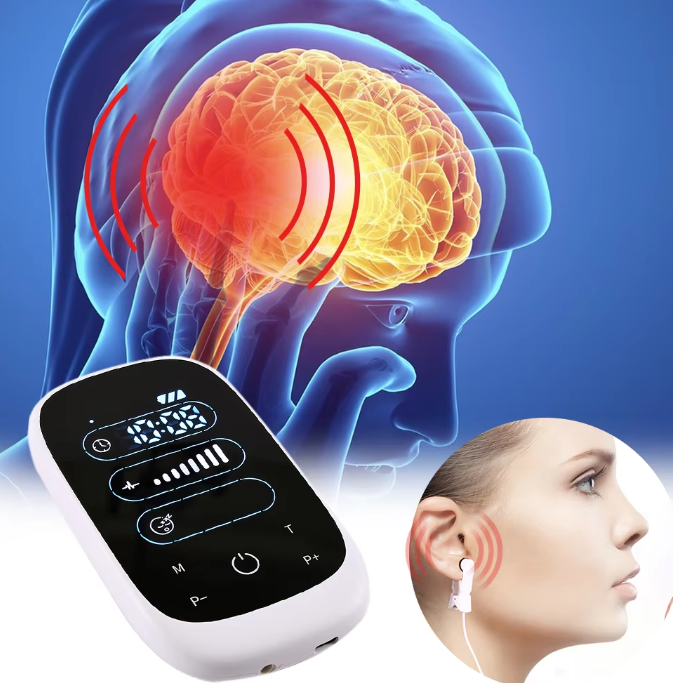
Clinical studies on FDA approved CES devices have found some pretty impressive results for people struggling with insomnia. The numbers are striking actually: about half an hour less time to fall asleep and roughly 30% fewer times waking up during the night. What makes CES different from traditional sleeping pills? Instead of knocking someone out cold, these devices work by sending gentle electrical signals through the brain. They target those overactive areas responsible for keeping people awake at night. Looking at real world usage through telehealth platforms shows promising long term effects too. Most folks who stick with it for around a month notice better ability to stay asleep throughout the night. The technology works on two fronts at once really calming nervous system activity while encouraging deeper sleep patterns. With healthcare systems increasingly looking for alternatives to medications and addictive treatments, CES seems to be catching on fast among providers seeking effective solutions backed by solid research.
CES for Anxiety: Clinical Validation Meets Commercial Opportunity
Cranial Electrotherapy Stimulation, or CES for short, works pretty well for managing anxiety according to several studies looking at double blind trials. Research covering 34 different studies where some people got fake treatments showed that CES helps reduce anxiety symptoms in the short term. The brain's automatic control centers seem to respond to this therapy. About 73 percent of folks who tried it still felt better after six months even though they only did the treatment for ten weeks. That finding comes from a study published in the Journal of Integrative Medicine back in 2023. More recently, scientists analyzed eight randomized controlled trials involving 337 participants and found CES had a strong effect size of minus 0.96 with p value way below 0.00001. So basically, it worked much better than placebo treatments and was just as good whether used alone or along with other therapies. Since insomnia often goes hand in hand with anxiety disorders, and these conditions share similar problems in how the nervous system functions, CES stands out as an FDA approved option that tackles both issues at once. This makes sense commercially too. There are big business opportunities here for companies selling through telehealth platforms or directly to consumers. Think about it: nearly 60 percent of people dealing with anxiety haven't tried any treatment yet, and around a quarter don't respond well to traditional medications.
Commercial Pathways for CES Devices in the Insomnia Care Ecosystem
Direct-to-Consumer Adoption: Marketing CES as an At-Home Insomnia Intervention
The direct-to-consumer (DTC) model has emerged as a pivotal channel for CES devices, capitalizing on rising demand for accessible, non-pharmacological insomnia treatments. With over 30% of adults experiencing chronic sleep disturbances, consumers increasingly seek FDA-cleared solutions that avoid medication side effects and prescription barriers. Effective DTC strategies emphasize three differentiators:
- Accessibility: Seamless e-commerce distribution eliminates gatekeeping by clinicians
- Cost efficiency: A one-time investment contrasts sharply with recurring medication expenses
-
Clinical validation: Messaging highlights peer-reviewed outcomes—including 40% improvement in sleep maintenance and 55% reduction in sleep latency
Marketing focuses on user-friendly design and measurable benefits, using digital analytics to reach high-intent audiences actively searching for insomnia solutions. This positions CES not as a niche gadget, but as a foundational tool in self-managed sleep health ecosystems.
Integration with Telehealth and Digital Therapeutics Platforms
Telehealth adoption is accelerating CES integration, with virtual clinics prescribing devices alongside cognitive behavioral therapy for insomnia (CBT-I). This convergence creates synergistic clinical and operational value:
- Clinicians remotely monitor patient progress through integrated data dashboards
- Digital therapeutics platforms combine CES with personalized sleep coaching algorithms
- Real-world adherence tracking enables dynamic, individualized treatment adjustments
Care models embedding CES within comprehensive digital sleep programs demonstrate 28% higher patient compliance. Interoperability between CES hardware and therapeutic software also unlocks insurance-reimbursable pathways—particularly impactful for rural and underserved populations with limited access to sleep specialists. As a result, CES is evolving from a standalone device into a connected component of value-based insomnia management frameworks.
Regulatory, Reimbursement, and Competitive Landscape Challenges
Getting through the maze of regulations continues to be one of the biggest hurdles when it comes to adopting CES devices for treating insomnia. Companies run into all sorts of different rules depending on where they operate. The FDA wants premarket clearance in America while European markets require CE marking. These differences really slow things down and can bump up compliance expenses somewhere around 25-35% for most medical gadgets. When manufacturers don't meet these standards, they're looking at possible product recalls or hefty fines from regulators. This is especially true when making any sort of claim about improving sleep quality, which regulators tend to scrutinize very closely.
Reimbursement uncertainty further complicates commercial viability. While some insurers cover CES for anxiety disorders, most policies exclude standalone coverage for insomnia applications despite robust clinical validation of reduced sleep latency and improved sleep maintenance. This gap forces consumers toward out-of-pocket purchases, limiting accessibility for lower-income populations.
Things are getting pretty crowded in the sleep tech space these days, especially since so many new companies have entered what's already a $1.2 billion market. The old guard medical device manufacturers find themselves facing off against all sorts of direct-to-consumer wellness startups. This competition has driven prices down across the board, which puts serious pressure on profit margins for everyone involved. For companies trying to stand out from the pack, real clinical data matters way more than flashy advertising promises. Without solid evidence backing up their products, most will end up as generic options fighting over shrinking markets instead of building something truly valuable for customers looking to improve their sleep health.