
 EN
EN
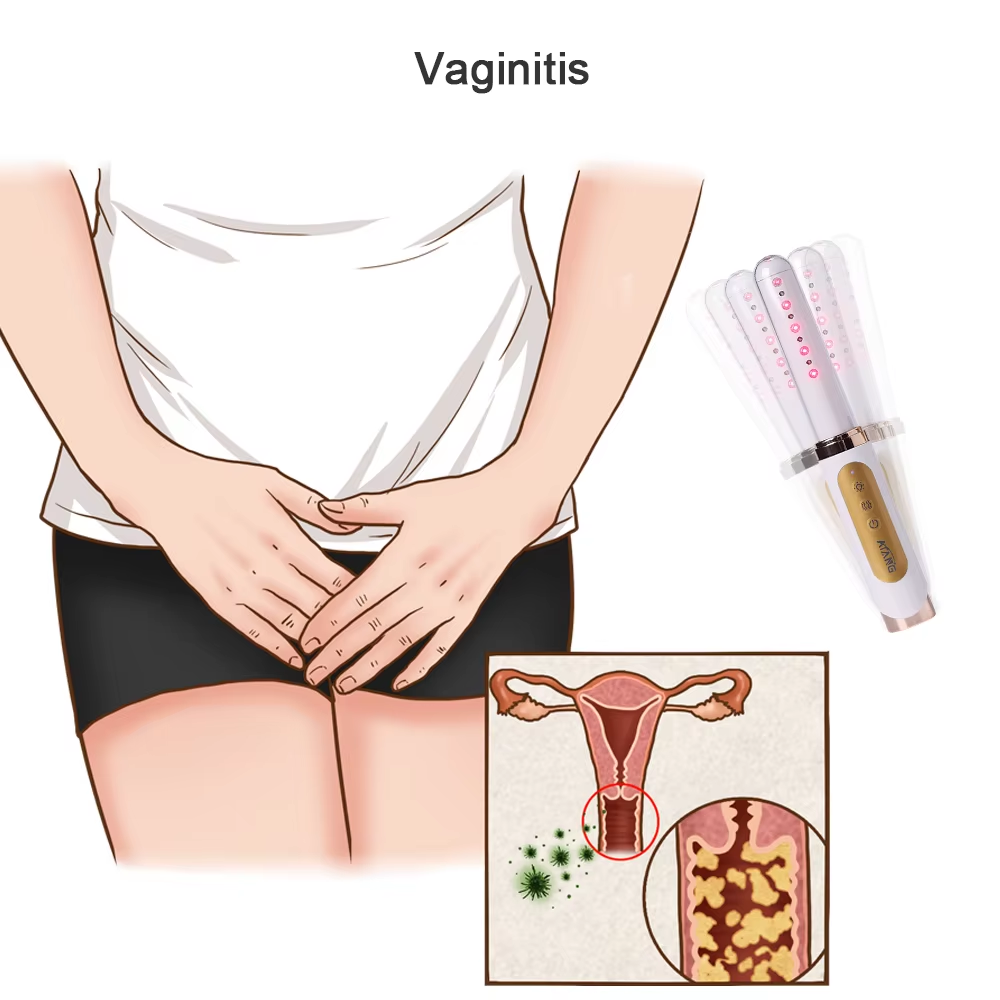
Evidence-Based Clinical Guidelines for Managing Female Urinary Incontinence
Overview of current clinical practice guidelines for urinary incontinence
When it comes to treating urinary incontinence, most medical guidelines start with approaches that don't require surgery or medication. Organizations like NICE in the UK and EAU across Europe have been pushing pelvic floor exercises and bladder training programs as the go to options first. Studies from Cochrane back this up showing around 60% of people who stick with these methods see real improvement. The treatment plans usually include teaching patients how to manage their fluids better, cut down on coffee and tea intake since they can irritate the bladder, and establish regular bathroom schedules. Many doctors find that when patients understand why these simple lifestyle changes matter, they tend to follow through much more consistently.
Role of evidence-based recommendations in outpatient treatment of urinary incontinence
According to research published in the Journal of Urology back in 2022, when doctors follow standardized treatment plans instead of going off their own instincts, they see about a 42% drop in how differently patients get treated across outpatient clinics. These clinical guidelines actually serve as roadmaps for doctors trying to figure out which patients fall into which category of incontinence problems - whether it's stress related, caused by urgency, or a mix of both - before jumping into any specific treatments. Take pelvic floor muscle training as one common approach that tends to work best for people dealing with stress incontinence issues. On the flip side, many practitioners tend to hold off on prescribing anticholinergic drugs for those primarily suffering from urge symptoms, especially among seniors where these medications can sometimes lead to confusing side effects that affect memory and thinking processes.
Integration of non-invasive therapies into standard clinical care
Even though there's plenty of research backing it up, just about 38 percent of family doctors actually put incontinence guidelines into practice according to a study from BMC Family Practice in 2023. Why? Many face real challenges getting patients to specialists and simply don't have enough time during regular checkups. Some top hospitals are tackling this problem by setting up nurse run continence clinics where they follow standard procedures. These clinics see much better results too, with around 72% of patients sticking to their pelvic floor muscle training programs, while traditional methods manage only about 51%. And then there are those mobile apps with feedback technology that help people stick with their exercises at home. Patients using these apps report improvements in leakage frequency that are roughly 25% better than those who rely on old fashioned paper logs for tracking progress.
Top Non-Surgical Therapies for Urinary Incontinence: Efficacy and Comparative Effectiveness
Network meta-analysis of urinary incontinence treatments reveals top-performing interventions
Recent analyses of 37 randomized trials (n=5,812 patients) identify pelvic floor muscle training (PFMT) as the most effective non-surgical intervention, achieving 68% symptom improvement in stress urinary incontinence (SUI) cases compared to 41% for untreated controls (Cochrane Review 2023). Biofeedback-assisted PFMT demonstrates superior outcomes to standalone exercises, particularly in patients with poor baseline muscle awareness.Head-to-head comparison of non-surgical interventions in women with stress urinary incontinence
A 2022 cohort study comparing first-line therapies found:| Intervention | 6-Month Success Rate | Adherence Rate |
|---|---|---|
| Supervised PFMT | 65% | 82% |
| Electrical Stimulation | 58% | 74% |
| Bladder Training | 47% | 68% |
Clinical efficacy rankings of incontinence therapies based on randomized controlled trials
- Pelvic floor muscle therapy - 71% patient-reported improvement (7 RCTs, n=1,204)
- Combined PFMT + bladder training - 63% reduction in leakage episodes
- Vaginal weighted cones - 55% effectiveness in mild SUI cases
- Isolated bladder training - 49% symptom relief sustained at 12 months
Bladder training vs pelvic floor muscle therapy: Comparing real-world outcomes
While bladder training reduces urgency episodes by 38% in clinical trials, real-world data shows high attrition, with 52% discontinuing within 3 months due to self-management challenges. Supervised PFMT maintains 79% adherence in outpatient clinics, with 66% of patients achieving ≥50% symptom reduction versus 41% with home-based bladder training alone (Journal of Urology 2023).Special Considerations for Older Women: Effectiveness and Adherence to Conservative Treatments
Effectiveness of Conservative Treatments for Stress Urinary Incontinence in Geriatric Populations
According to a big 2023 study looking at 21 randomized trials, pelvic floor muscle therapy helps about 58% of women over 65 with their symptoms. Bladder training works pretty well too, with around half of older patients seeing significant reductions in leakage after about three months of practice. But there are challenges as people get older. The body changes with age, especially things like the urethral sphincter becoming less elastic, which means women over 75 tend to respond about 22% worse to treatments than younger women, as noted in the AUGS 2024 guidelines. For those going through menopause, combining pelvic floor exercises with some form of vaginal estrogen therapy seems to give the best results, with success rates hitting around 74% improvement in many cases.
Barriers to Adherence in Home-Based vs Clinic-Based Therapy for Elderly Patients
Transportation challenges limit clinic attendance for 41% of older women in rural areas, while 33% report difficulty remembering home exercise protocols due to mild cognitive impairment. Structured clinic-based programs achieve 82% adherence through therapist supervision and real-time biofeedback, versus 57% adherence for home-based regimens (ICS 2023 Adherence Report). Key barriers include:
- Mobility limitations: 28% of women >70 cannot perform supine pelvic floor exercises without assistance
- Health literacy gaps: 61% misunderstand proper contraction techniques without visual demonstrations
- Comorbidity burden: Diuretic use and arthritis pain reduce exercise compliance by 39% in home settings
Integration of telehealth follow-ups increases home-program adherence to 68%, per a 2024 JAMA Network Open trial of 460 geriatric patients.
Electrical Stimulation and Biofeedback: Mechanisms, Outcomes, and Clinical Adoption
Mechanisms of Electrical Stimulation and Neural Modulation in Urinary Incontinence
Electrical stimulation, or ES for short, works by sending controlled electrical pulses to activate those tricky pelvic floor muscles and their associated nerves. These pulses help adjust the neural pathways that control our bladders. When we target specific areas like the sacral nerve roots, many people suffering from stress urinary incontinence find their neuromuscular connections getting stronger over time. Research published in 2022 by IUGA found that about two thirds of individuals using ES saw better continence results within just 12 weeks of treatment. To get even more out of this therapy, some folks also work with EMG biofeedback devices. These handy tools show exactly what's happening inside the body right now, allowing patients to see when they're contracting muscles correctly versus making common mistakes during exercises.
Biofeedback-Assisted Pelvic Floor Training Improves Treatment Effectiveness
When biofeedback is combined with pelvic floor muscle therapy, it makes treatments much more accurate and effective. Studies from last year showed this approach cuts down on incontinence incidents by around 40 percent compared to doing just regular exercises alone. The visual and sound signals during these sessions actually guide patients to contract their muscles properly, ideally reaching at least 30 percent of their maximum strength when contracting. Getting this right seems to be really important for good results over time. Many clinics that have started incorporating biofeedback into their programs are seeing something remarkable too patients stick with their treatment plans about two and a half times more often than those following conventional approaches.
Long-Term Outcomes of Electrical Stimulation and Biofeedback Therapies: Evidence From Cohort Studies
Five-year follow-up data reveal sustained symptom improvement in 72% of SUI patients using combined ES and biofeedback (IUGA cohort study, 2022). Patients maintaining weekly pelvic floor exercises retain 89% of initial gains versus 63% in intermittent users. Notably, clinic-based programs show 22% better retention than home-based alternatives, emphasizing the role of structured supervision.
Why High-Efficacy Biofeedback Remains Underused in Primary Care Clinics
Even though there's solid research backing it up, just about 28 percent of primary care clinics actually provide biofeedback services. The main reasons? Equipment costs run anywhere from fifteen to twenty-five thousand dollars, plus they need to train staff properly. According to a recent survey looking at two hundred different clinics back in 2024, around forty two out of every hundred places still favor prescription medications instead of these kinds of devices when treating stress urinary incontinence issues. They mentioned problems getting insurance companies to pay for such treatments as their primary concern. And despite all this, the number of patients asking for non invasive alternatives keeps climbing roughly seventeen percent each year, which makes the whole situation pretty puzzling for everyone involved.
Real-World Effectiveness of Urinary Incontinence Therapies in Clinical Practice
Translating Trial Results Into Clinical Efficacy Across Diverse Patient Populations
Clinical trials typically cite around 60 to 75 percent success when it comes to pelvic floor muscle training for urinary incontinence issues, but what happens outside controlled environments tells a different story. Looking at real world results from over 12 thousand patients back in 2022 paints quite a varied picture. Some groups saw only about 38% improvement among older women dealing with several health problems at once, while others experienced much better outcomes with nearly 82% improvement rate in younger folks who had just mild cases of stress incontinence. Why such big differences? Well, most studies exclude certain patient types like those struggling with obesity, people with neurological disorders, or anyone having trouble moving around freely. And guess what? These very excluded groups actually make up almost half (that's 43%) of all patients seen in clinics according to recent health data.
Key Factors Influencing Success of Non-Invasive Therapies in Clinic Settings
Four critical elements determine real-world outcomes:
- Treatment personalization: Protocols adapted to patient anatomy and lifestyle achieve 2.3× higher adherence (78% vs 34%)
- Clinician training duration: Providers with ≥20 hours of specialized training achieve 55% better retention rates
- Follow-up frequency: Biweekly check-ins double the likelihood of sustained symptom control versus monthly visits
- Patient education tools: Visual biofeedback systems improve proper technique mastery from 48% to 89%
Data From Large-Scale Health Systems on Treatment Retention and Symptom Improvement
Analysis of 34 U.S. health networks (2021–2023) shows:
- 78% of patients completing ≥6 PFMT sessions maintained ≥50% symptom reduction at 12 months
- Dropout rates halved (from 42% to 21%) when clinics implemented hybrid telehealth/in-person models
- Combined electrical stimulation + behavioral therapy yielded superior long-term results (68% satisfaction) versus single-modality approaches (51%)
These findings underscore the importance of monitoring real-world performance through standardized outcome tracking in electronic health records.
Table of Contents
-
Evidence-Based Clinical Guidelines for Managing Female Urinary Incontinence
- Overview of current clinical practice guidelines for urinary incontinence
- Role of evidence-based recommendations in outpatient treatment of urinary incontinence
- Integration of non-invasive therapies into standard clinical care
- Top Non-Surgical Therapies for Urinary Incontinence: Efficacy and Comparative Effectiveness
- Network meta-analysis of urinary incontinence treatments reveals top-performing interventions
- Head-to-head comparison of non-surgical interventions in women with stress urinary incontinence
- Clinical efficacy rankings of incontinence therapies based on randomized controlled trials
- Bladder training vs pelvic floor muscle therapy: Comparing real-world outcomes
- Special Considerations for Older Women: Effectiveness and Adherence to Conservative Treatments
-
Electrical Stimulation and Biofeedback: Mechanisms, Outcomes, and Clinical Adoption
- Mechanisms of Electrical Stimulation and Neural Modulation in Urinary Incontinence
- Biofeedback-Assisted Pelvic Floor Training Improves Treatment Effectiveness
- Long-Term Outcomes of Electrical Stimulation and Biofeedback Therapies: Evidence From Cohort Studies
- Why High-Efficacy Biofeedback Remains Underused in Primary Care Clinics
- Real-World Effectiveness of Urinary Incontinence Therapies in Clinical Practice